
Abstract
Modern electronic systems require efficient electromagnetic components capable of delivering stable performance within increasingly compact designs. A carefully engineered Wire Coil plays an essential role in energy conversion, magnetic field generation, inductive coupling, and high-frequency electrical applications. Winding geometry, conductor structure, insulation, and manufacturing precision directly influence electrical efficiency and operational reliability. We explore coil operating principles, winding technologies, material selection, high-frequency performance, industrial applications, and quality control to help engineers choose suitable electromagnetic components.
Explore the engineering guide. Click any topic to jump directly to its section.
Why Are Precision Wound Coils Essential in Modern Electronics?
Electromagnetic coils are fundamental components in equipment that converts, stores, transfers, or controls electrical energy. They appear in transformers, motors, inductors, wireless charging systems, and communication devices.
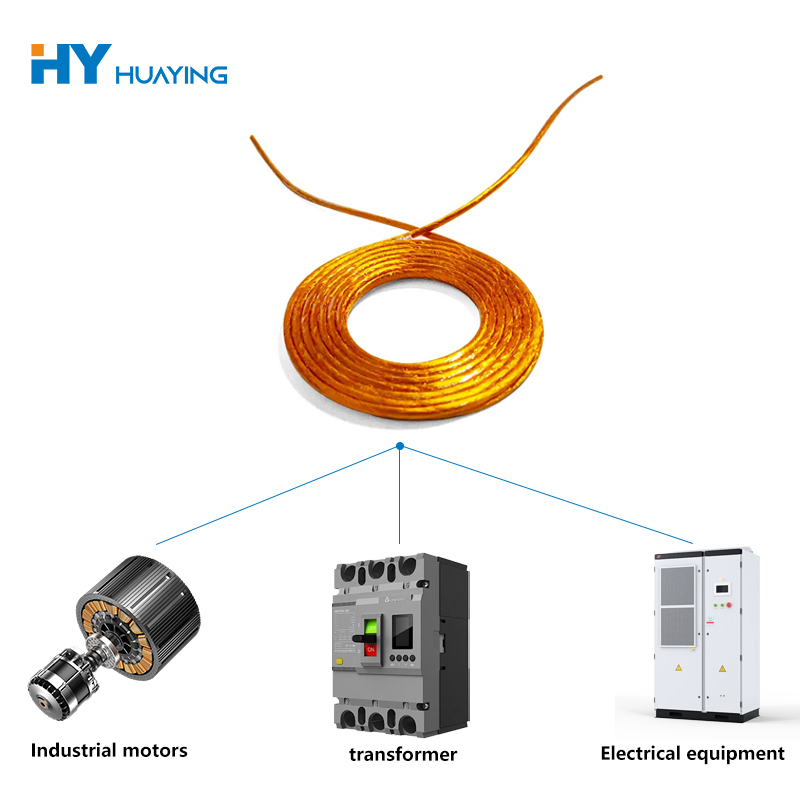
A coil is typically formed by winding an insulated conductor into a controlled geometric arrangement. When electrical current flows through the winding, it generates a magnetic field. The resulting behavior depends on conductor properties, winding geometry, frequency, and surrounding materials.
How Winding Geometry Influences Performance
The number of turns, winding diameter, conductor spacing, and coil shape influence inductance, resistance, magnetic coupling, and parasitic capacitance.
Poor winding uniformity can introduce inconsistent electrical characteristics. Precision winding helps manufacturers achieve repeatable performance across production batches.
The Importance of Insulated Conductors
Adjacent turns must remain electrically separated unless the design specifically requires a conductive connection. Insulation helps prevent turn-to-turn short circuits and supports the intended electrical withstand capability.
At Huaying, we focus on insulated conductor technology and precision winding solutions for demanding electromagnetic applications.
How Do Electrical Coils Generate and Control Magnetic Fields?
The operation of a coil follows the principles of electromagnetism. Current flowing through a conductor produces a magnetic field, while changes in magnetic flux can induce electrical voltage.
These principles enable coils to perform several different functions depending on their application and configuration.
Electromagnetic Induction
When magnetic flux changes through a winding, an electromotive force is induced. This principle is central to transformer operation, inductive coupling, and many power-conversion systems.
Inductance and Energy Storage
Inductance describes a circuit element's relationship between changing current and induced voltage. An inductor stores energy in its magnetic field when current flows through the winding.
Inductance is affected by the number of turns, coil geometry, magnetic permeability, and core construction.
Frequency-Dependent Behavior
At higher frequencies, alternating current distribution becomes less uniform within conductors because of skin and proximity effects.
These effects can increase AC resistance and winding losses, making conductor configuration particularly important in high-frequency designs.
Key Engineering Advantages of Advanced Coil Technology
Our Wire Coil product category includes winding solutions designed for different electromagnetic and high-frequency requirements. Appropriate conductor selection and controlled manufacturing can improve component consistency and application suitability.
Suitable multi-strand conductor arrangements can reduce AC losses in selected high-frequency operating conditions.
Controlled turn placement and conductor tension support consistent geometry and electrical characteristics.
Different insulation constructions accommodate electrical withstand, thermal, and application-specific requirements.
Coil dimensions, winding structures, conductor types, and termination arrangements can be selected according to engineering needs.
Why Litz Conductors Matter
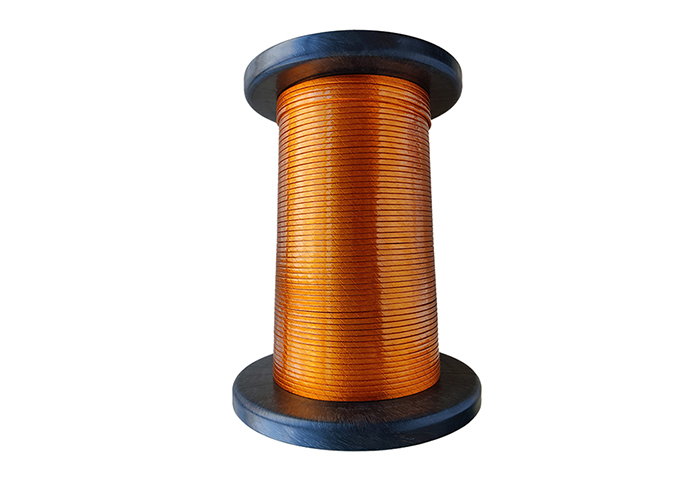
Litz wire uses multiple individually insulated strands arranged to distribute their positions through the conductor bundle.
When correctly designed for the operating frequency, this structure can reduce the effects of nonuniform current distribution compared with an equivalent solid conductor.
However, strand diameter, strand count, twisting pattern, and operating conditions must be evaluated together.
04. Which Coil Types Are Suitable for Different Applications?
Our product portfolio includes several coil constructions intended for different frequencies, mechanical requirements, and insulation conditions.
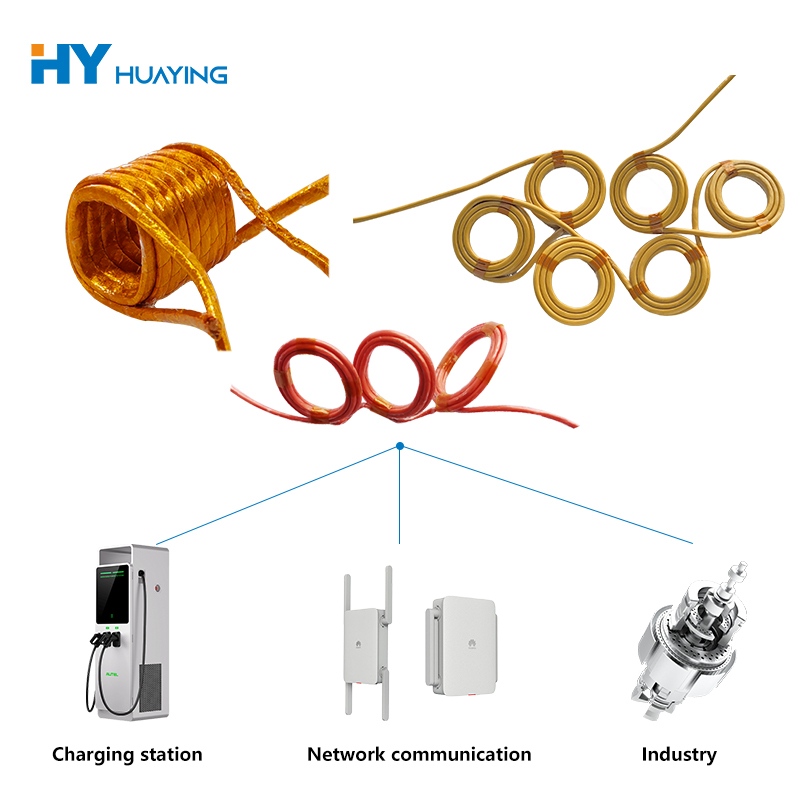
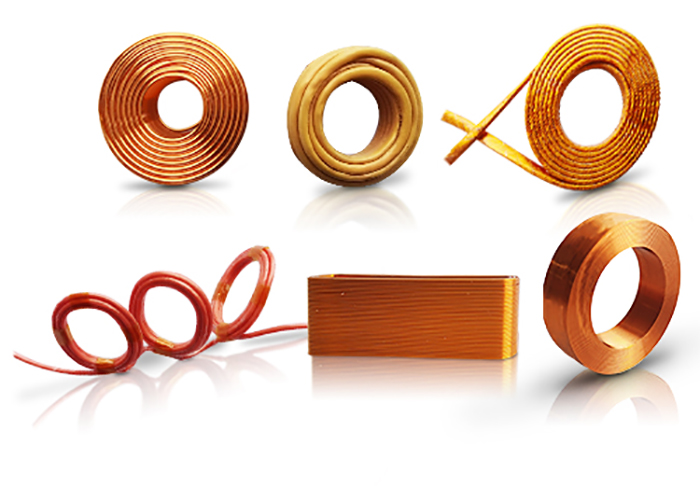
Available product categories include high-frequency Litz coils, Litz stranded coils, air-core coils, multifilar configurations, and self-adhesive designs.
| Coil Type | Design Characteristics | Typical Application |
|---|---|---|
| High-Frequency Litz Coil | Uses multiple insulated fine strands to help manage frequency-dependent conductor losses. | High-frequency power conversion, inductive coupling, and wireless energy transfer. |
| Litz Wire Air-Core Coil | Wound without a ferromagnetic core, avoiding magnetic core saturation and core hysteresis losses. | Wireless charging, resonant circuits, and selected high-frequency systems. |
| Multifilar Litz Coil | Incorporates multiple insulated strands or conductors in a controlled winding arrangement. | Specialized inductive components and compact electromagnetic assemblies. |
| Litz Stranded Coil | Uses a stranded conductor structure selected according to electrical and mechanical requirements. | High-frequency magnetic components and electronic power systems. |
| Self-Adhesive Coil | Uses bondable winding materials that help maintain the intended coil geometry. | Compact components, precision assemblies, and specialized electronic devices. |
Actual characteristics depend on the conductor, insulation system, dimensions, winding arrangement, and individual product specifications.
Air-Core Versus Magnetic-Core Designs
Air-core coils avoid magnetic saturation associated with ferromagnetic cores. They can be suitable for resonant and high-frequency applications.
Magnetic-core coils use materials with greater magnetic permeability to achieve different inductance and coupling characteristics.
The appropriate design depends on operating frequency, inductance, current, magnetic losses, and available installation space.
How Does Precision Winding Improve Coil Manufacturing Quality?
Coil manufacturing involves more than wrapping a conductor around a former. Each stage affects the final mechanical structure and electrical performance.
The Manufacturing Process
- Conductor Selection: Engineers choose suitable conductor materials, strand dimensions, and insulation structures according to the application requirements.
- Winding Design: Turn count, winding diameter, conductor arrangement, and target dimensions are established.
- Tension Control: Appropriate winding tension helps maintain consistent geometry while reducing the risk of insulation damage.
- Coil Formation: The conductor is arranged into the required shape using controlled winding procedures.
- Termination Processing: Electrical connections are prepared using suitable insulation removal, joining, and termination methods.
- Electrical Inspection: Relevant resistance, inductance, dimensions, and insulation characteristics are checked.
Winding Tension and Insulation Integrity
Excessive mechanical tension can stretch conductors or damage insulation. Insufficient tension may cause loose windings, inconsistent dimensions, or unwanted movement during operation.
Controlled tension helps achieve stable winding geometry while protecting the conductor surface.
Why Turn Placement Matters
Uneven turn spacing influences parasitic capacitance, magnetic coupling, and mechanical consistency.
We emphasize controlled manufacturing and appropriate inspection to support repeatable coil characteristics.
Where Are Precision Electrical Coils Used?
A properly designed Wire Coil can support numerous electronic and electromechanical systems, from compact consumer devices to industrial power equipment.
Wireless Charging Systems
Wireless power transfer relies on magnetic coupling between transmitting and receiving coils.
Coil geometry, alignment, inductance, AC resistance, and operating frequency influence transfer performance.
Air-core and Litz-based designs are commonly considered for high-frequency inductive charging arrangements.
Electric Vehicles and Power Electronics
Electric vehicles contain electromagnetic components used in power conversion, filtering, magnetic coupling, and auxiliary electronics.
Appropriate winding technology helps engineers address current capacity, thermal behavior, insulation, and installation constraints.
Transformers and Inductive Components
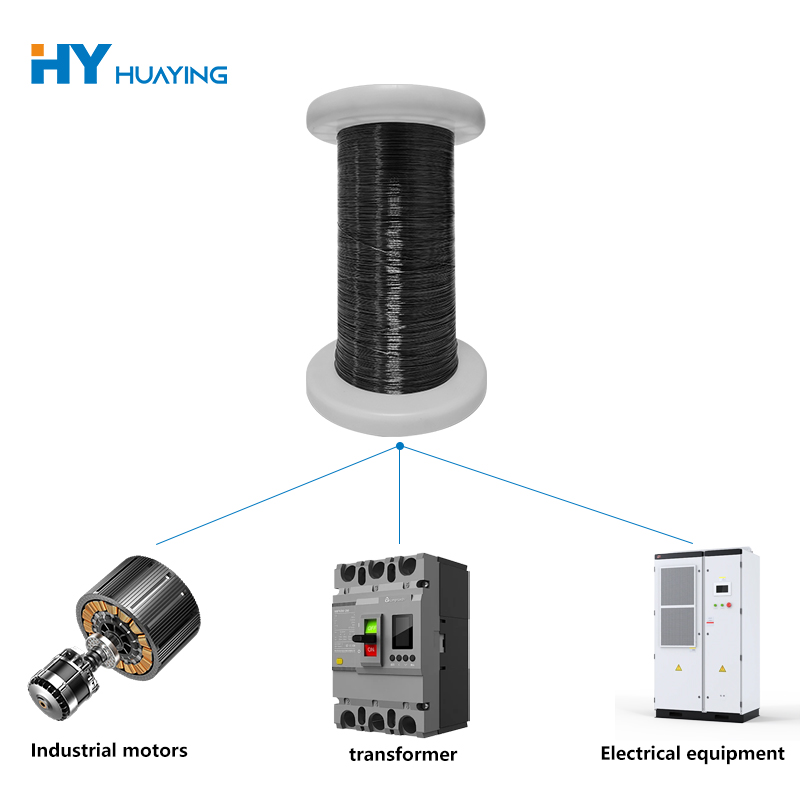
Transformers transfer electrical energy between circuits through magnetic coupling. Their winding construction influences copper losses, insulation coordination, and thermal performance.
High-frequency transformers may benefit from specialized conductor arrangements designed for their operating conditions.
Communication Equipment
Communication infrastructure uses inductive components in power supplies, filtering circuits, and electronic control assemblies.
Consistent winding characteristics are important for predictable electrical behavior and equipment reliability.
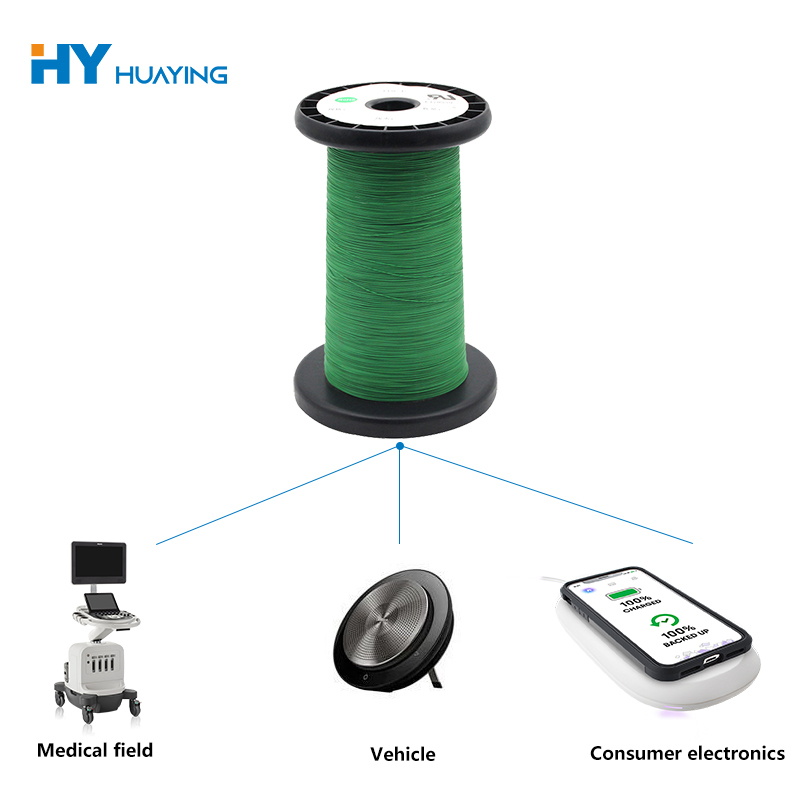
Medical and Smart Electronic Devices
Selected medical equipment, smart-home products, and portable electronics use coils for power conversion, sensing, or inductive energy transfer.
Applications with strict safety requirements must use components validated against the relevant electrical and environmental specifications.
What Quality Factors Determine Long-Term Coil Reliability?
Reliable coil operation depends on conductor quality, winding consistency, insulation performance, electrical characteristics, and thermal management.
We emphasize consistent production processes and technical evaluation to help customers identify suitable winding solutions.
Electrical Resistance and Conductor Loss
DC resistance depends on conductor resistivity, cross-sectional area, and total conductor length.
At higher frequencies, AC resistance can increase because of current distribution and neighboring magnetic field effects.
Material selection must therefore reflect both the electrical operating frequency and expected current conditions.
Thermal Performance
Electrical losses produce heat. Excessive temperature can accelerate insulation degradation and reduce component reliability.
Engineers should evaluate ambient temperature, current loading, cooling conditions, and the applicable insulation temperature rating.
Insulation and Dimensional Inspection
| Inspection Area | Evaluation Method | Engineering Importance |
|---|---|---|
| DC Resistance | Resistance measurement under defined conditions | Supports conductor consistency and electrical loss evaluation |
| Inductance | Measurement at specified frequency and test conditions | Confirms intended magnetic and circuit characteristics |
| Insulation Integrity | Applicable dielectric and insulation testing | Helps verify electrical separation and withstand capability |
| Winding Dimensions | Geometric measurement and visual inspection | Supports installation and assembly compatibility |
| Termination Quality | Connection inspection and relevant electrical checks | Helps maintain reliable electrical connections |
| Thermal Behavior | Temperature-rise testing under defined loading | Supports safe operation and insulation reliability |
Inspection requirements depend on the application, winding construction, customer specifications, and relevant product standards.
08. How Should Engineers Select the Right Coil Design?
Selecting the appropriate Wire Coil requires a detailed understanding of frequency, current, inductance, mechanical dimensions, insulation, and thermal requirements.
Define Operating Frequency
The operating frequency affects conductor loss, magnetic behavior, and the suitability of different winding structures.
High-frequency applications may benefit from appropriately designed Litz conductors, while other conditions may favor different conductor arrangements.
Evaluate Current and Thermal Conditions
Current rating must be considered together with conductor resistance, cooling arrangements, permissible temperature rise, and duty cycle.
Confirm Insulation Requirements
Operating voltage, insulation coordination, environmental conditions, and relevant safety standards influence insulation selection.
Review Mechanical Constraints
Coil diameter, height, winding shape, terminal position, and mounting arrangement should match the available installation space.
Check Electrical Design Targets
Inductance, quality factor, AC resistance, coupling, and parasitic capacitance may be important depending on the circuit.
- Operating Frequency: Identify the frequency range and expected electrical waveform.
- Current Requirements: Determine continuous current, peak current, and thermal limits.
- Inductance Target: Define the required inductance and applicable measurement conditions.
- Insulation System: Confirm electrical withstand and temperature requirements.
- Installation Geometry: Specify winding dimensions, terminal positions, and mechanical limitations.
We recommend evaluating these parameters together before finalizing a winding configuration. Detailed application information helps match the coil structure to the intended electrical system.
Frequently Asked Questions
Explore practical answers to common coil engineering questions. Select any question to reveal its technical explanation.
What is the primary function of an electrical coil?
An electrical coil produces a magnetic field when current flows through its winding. Depending on its construction, it can store magnetic energy, transfer energy through electromagnetic induction, or support sensing and signal-processing functions.
What is the difference between Litz wire and solid copper wire?
Litz wire contains multiple individually insulated strands, typically arranged to reduce certain high-frequency losses. Solid copper wire uses a single continuous conductor. Their relative performance depends on frequency, geometry, and current requirements.
Why are air-core coils used in wireless charging systems?
Air-core coils avoid magnetic core saturation and core hysteresis losses. They are useful in selected resonant inductive systems, although coupling efficiency also depends on coil geometry, alignment, and surrounding magnetic materials.
How does wire diameter influence coil performance?
Conductor diameter affects resistance, current-carrying capability, mechanical flexibility, and winding dimensions. In high-frequency applications, strand diameter also influences the effects of nonuniform current distribution.
What causes excessive coil temperature rise?
Excessive heating may result from high current, conductor losses, unsuitable frequency conditions, inadequate cooling, or unexpected magnetic losses in associated components.
Can coil dimensions be customized?
Many winding designs can be adapted to specific dimensions, turn counts, conductor structures, and termination arrangements, subject to electrical and manufacturing feasibility.
Why is insulation important in coil design?
Insulation separates adjacent conductors and helps prevent unintended electrical contact. The insulation system must accommodate voltage stress, temperature, mechanical processing, and applicable safety requirements.
What information is needed for custom coil selection?
Useful information includes operating frequency, current, voltage, target inductance, conductor requirements, insulation class, dimensions, operating temperature, and termination preferences.
Advancing Electronic Performance Through Precision Coil Technology
Modern electromagnetic systems depend on accurate conductor selection, controlled winding processes, and dependable insulation performance.
At Huizhou Huaying Electronics Technology Co., Ltd. , we focus on the development and manufacturing of insulated wire products and precision electromagnetic winding solutions.
Our Wire Coil products support engineers working with high-frequency power systems, wireless charging, electronic equipment, and specialized electromagnetic applications.
We emphasize winding consistency, material compatibility, insulation reliability, and application-specific electrical characteristics.
Selecting the correct coil requires more than identifying its physical dimensions. Operating frequency, conductor structure, electrical loading, and environmental conditions must be considered together.
Our team supports customers through technical communication, product configuration discussions, and application-oriented material selection.