
HOME > NEWS
How Can Triple-Layer Enameled Wire Improve Electrical Insulation and Winding Efficiency
Huaying, a specialized insulated wire manufacturer, develops Triple-Layer Enameled Wire for applications that demand reliable electrical insulation, consistent conductivity, and precise winding performance. Understanding its construction, manufacturing process, and selection criteria helps engineers and procurement teams choose a suitable wire for compact electrical and electronic equipment.
Triple-Layer Enameled Wire is designed to combine electrical conductivity with multiple protective insulation layers. Its performance depends on conductor dimensions, coating materials, insulation thickness, adhesion, and manufacturing consistency. For engineers designing transformers, inductors, coils, and other electromagnetic components, these characteristics influence winding efficiency, electrical reliability, and long-term operating stability. This guide explains the working principles, key advantages, manufacturing considerations, application scenarios, and purchasing factors associated with triple-layer insulated winding wire. It also introduces Huaying's production capabilities and provides practical questions buyers should ask before selecting a wire specification.
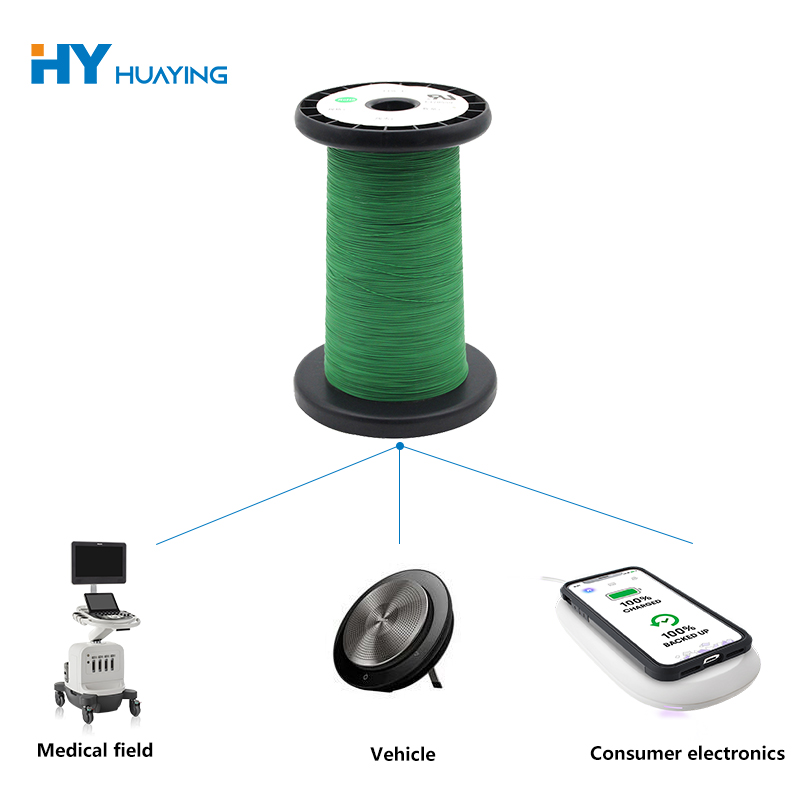
Table of Contents
- What Is Triple-Layer Enameled Wire?
- How Does Its Structure and Material Composition Work?
- What Are the Main Performance Advantages?
- How Is Triple-Layer Enameled Wire Manufactured?
- Where Is Triple-Layer Enameled Wire Used?
- How Do You Compare Wire Specifications?
- How Should Buyers Select the Right Wire?
- What Should You Know About Huaying?
- Frequently Asked Questions
- Conclusion
1. What Is Triple-Layer Enameled Wire?
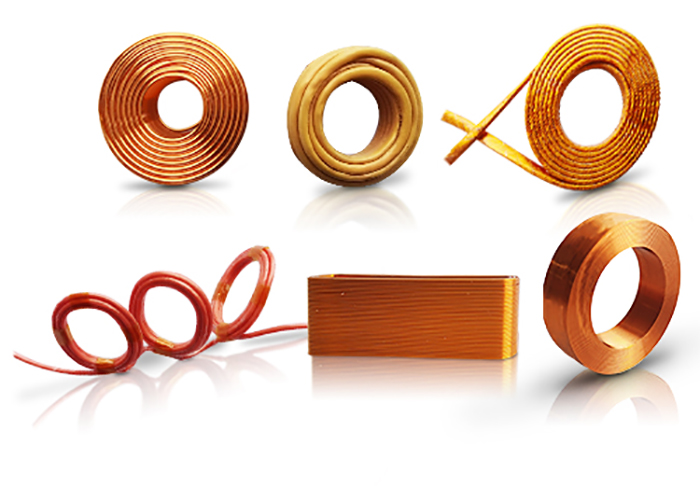
Triple-Layer Enameled Wire is a conductive wire designed with multiple insulation coatings or layers to help electrically isolate the conductor from surrounding components. Depending on the product design, the conductor may be made from copper or another specified conductive material, while the insulation system is selected according to electrical, thermal, and mechanical requirements.
Unlike a conductor protected by a single coating, a three-layer insulation design provides multiple protective barriers. This construction can improve insulation reliability and help manufacturers develop compact electromagnetic components where winding space is limited.
The term should not be confused with every type of triple-insulated wire. Enameled winding wire and triple-insulated wire can have different coating systems, construction methods, and compliance requirements. Buyers should therefore verify the exact product structure rather than assume that all three-layer wires share identical performance characteristics.
For more information about the available product, visit the Huaying Triple-Layer Enameled Wire product page.
2. How Does Its Structure and Material Composition Work?
The performance of triple-layer winding wire depends on how the conductor and insulation system work together. Each component contributes to the wire's overall electrical and mechanical characteristics.
- Conductive core: Carries electrical current through the winding. Conductor material, cross-sectional dimensions, and strand configuration influence electrical resistance and current-carrying capability.
- Primary insulation layer: Provides an initial electrical barrier between the conductor and adjacent turns or components.
- Intermediate insulation layer: Adds another protective barrier and contributes to the overall insulation system.
- Outer insulation layer: Helps protect the underlying layers during handling, winding, and assembly, subject to the material's properties.
The actual composition varies by product specification. Huaying's product information describes a manufacturing process involving polyamide film, high-insulation spray coating, and fiberglass. Buyers should confirm the precise material sequence and construction for the selected model before incorporating it into a design.
Insulation thickness is particularly important. Excessively thin insulation may not meet the required dielectric performance, while unnecessarily thick insulation can increase the finished wire diameter and reduce the space available for winding. A balanced design supports both electrical reliability and efficient component packaging.
3. What Are the Main Performance Advantages?
Reliable Electrical Insulation
Multiple insulation layers can provide additional protection against electrical contact between adjacent conductors and surrounding components. Actual dielectric strength depends on the insulation materials, thickness, production quality, and test conditions. Engineers should confirm the required withstand voltage and applicable standards before approving a wire for safety-critical equipment.
Potential for Compact Winding Designs
Where the insulation system meets the application's electrical requirements, a carefully optimized wire construction may help reduce the need for supplementary insulation materials. The resulting space savings depend on the component design and the specific insulation requirements; they should not be assumed without reviewing the relevant standards.
Consistent Manufacturing Quality
Uniform conductor dimensions and insulation coatings support predictable winding behavior. Coating defects, inconsistent diameters, or poor adhesion can create problems during automated winding and may affect the reliability of the finished component.
Long-Term Cost Considerations
Wire selection should account for more than the initial purchase price. Consistent quality can help reduce production defects, rework, and maintenance associated with insulation-related failures. The actual cost benefit depends on application conditions, product life, manufacturing yield, and the quality of the alternative materials being evaluated.
These benefits are conditional on choosing a suitable specification and verifying its performance. No insulation design eliminates the need for appropriate electrical protection, testing, and safe equipment design.
4. How Is Triple-Layer Enameled Wire Manufactured?
Manufacturing consistency is essential because the conductor and insulation must remain uniform along the length of the finished wire. Huaying describes several important stages in its production process.
- Wire drawing: The conductive material is drawn to the required dimensions. Surface quality and dimensional consistency are important for subsequent coating operations.
- Annealing: Controlled heat treatment can adjust the conductor's mechanical properties, helping it achieve the characteristics required for winding and further processing.
- Insulation application: Coating or insulating materials are applied according to the specified product construction. Uniform coverage helps limit thin spots and other potential defects.
- Thickness control: The manufacturer controls insulation dimensions to achieve the required finished diameter and electrical performance.
- Curing: Where the coating system requires curing, controlled processing helps develop the intended coating properties and adhesion.
- Final inspection: Appropriate dimensional, visual, electrical, and mechanical checks help verify conformity with the product specification.
Huaying's product page reports thickness-control accuracy of ±0.005 mm for its described coating process. Buyers should confirm the measurement reference, applicable model, and inspection method when using this figure as a procurement requirement.
For engineering teams, the most useful quality documentation includes a defined product specification, inspection criteria, traceability information where available, and test results relevant to the intended application.
5. Where Is Triple-Layer Enameled Wire Used?
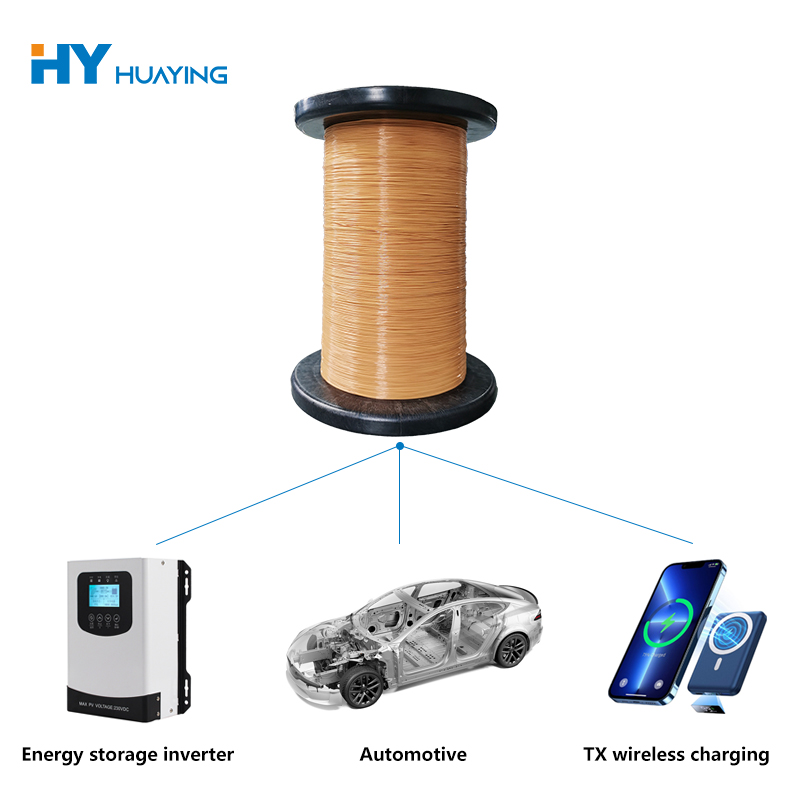
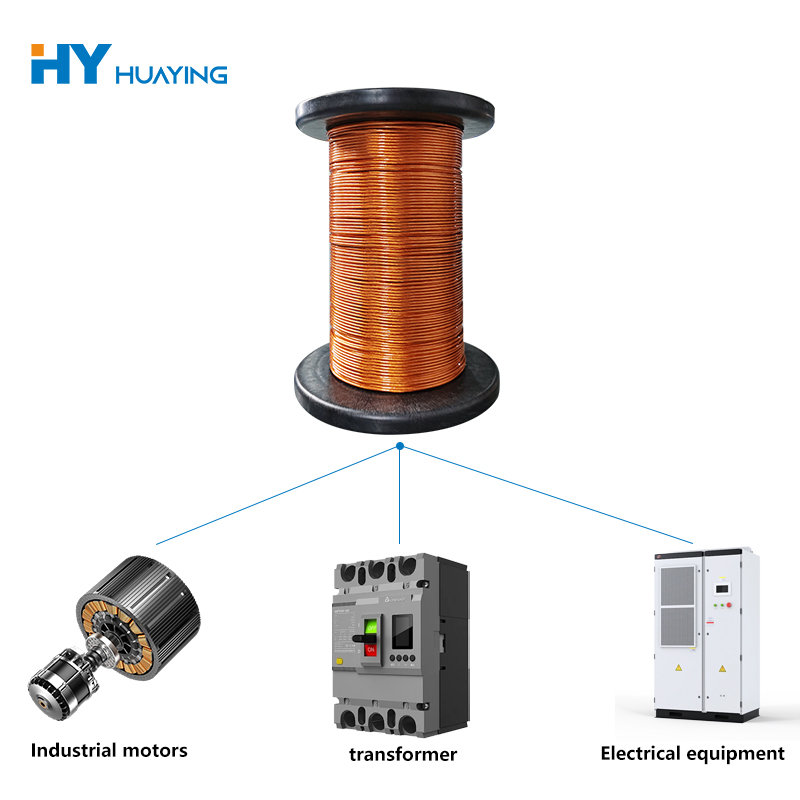
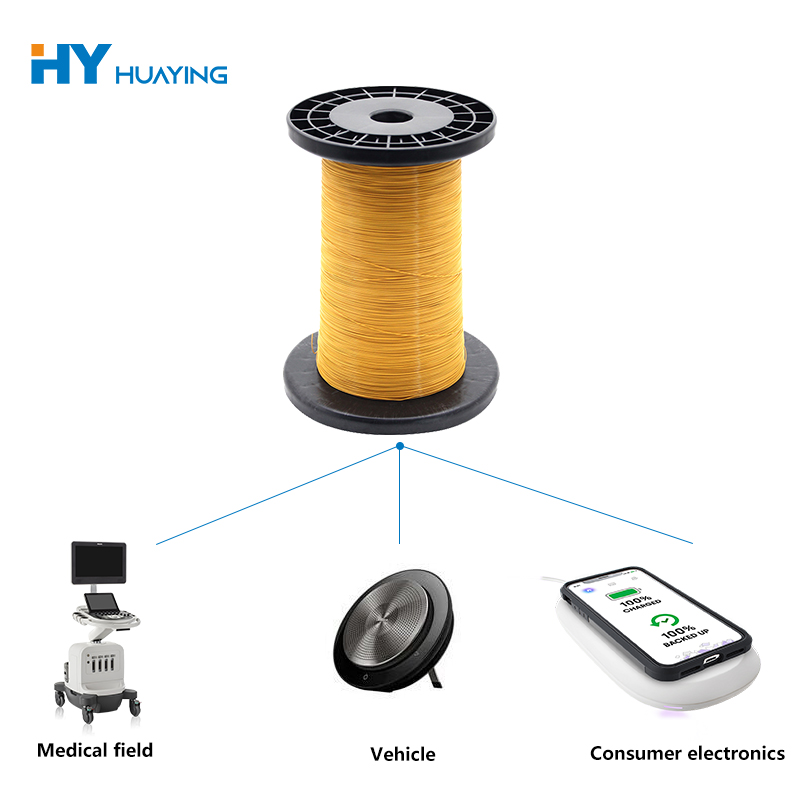
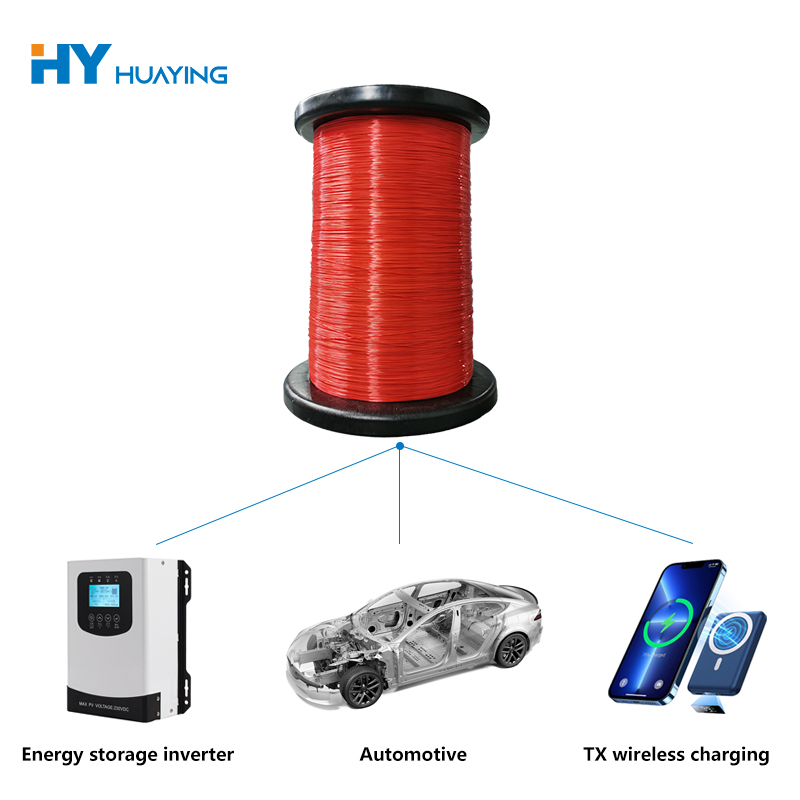
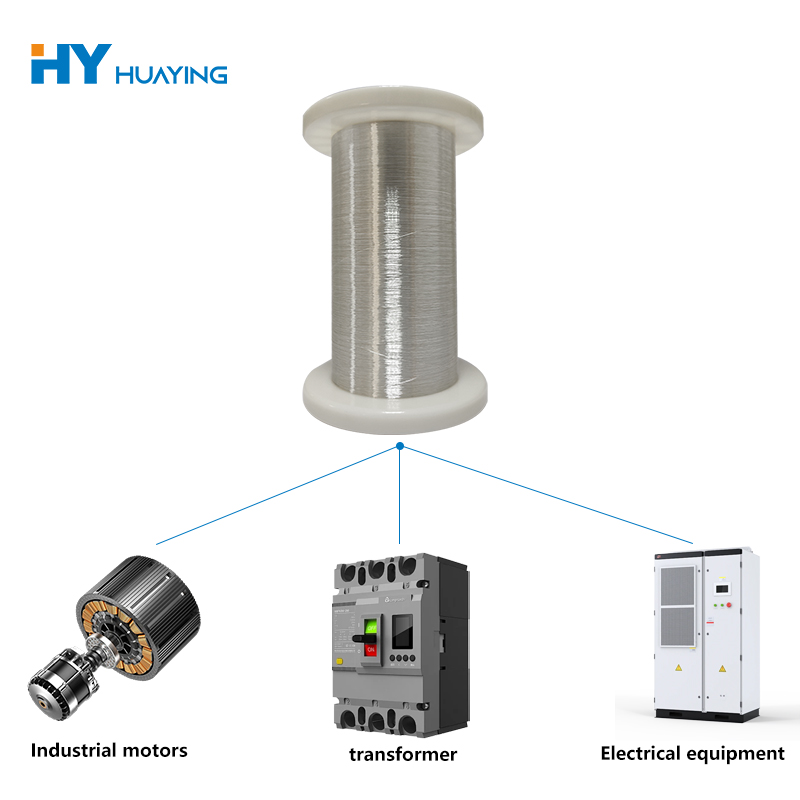
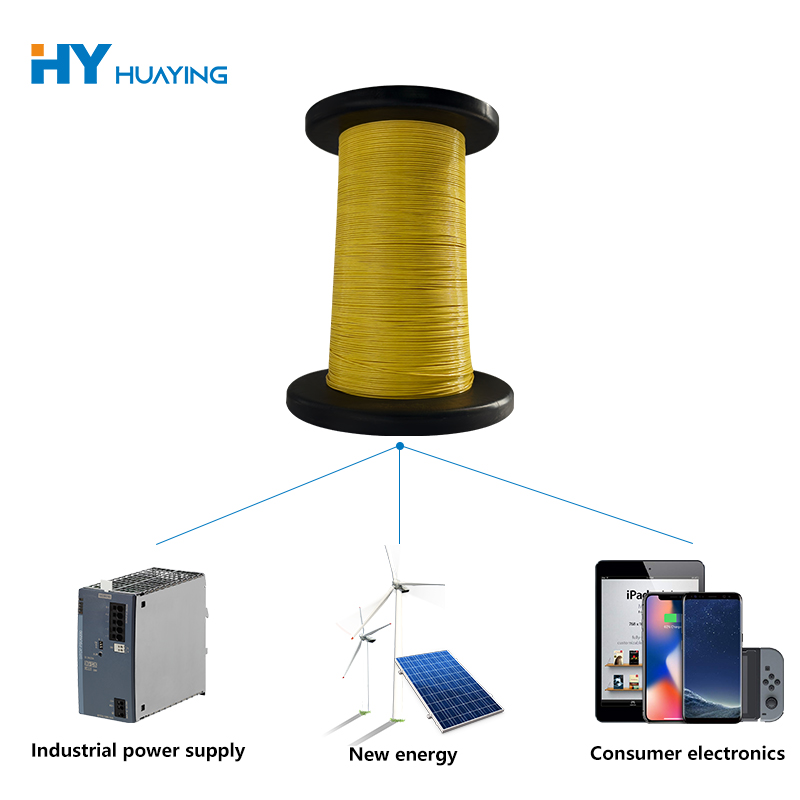
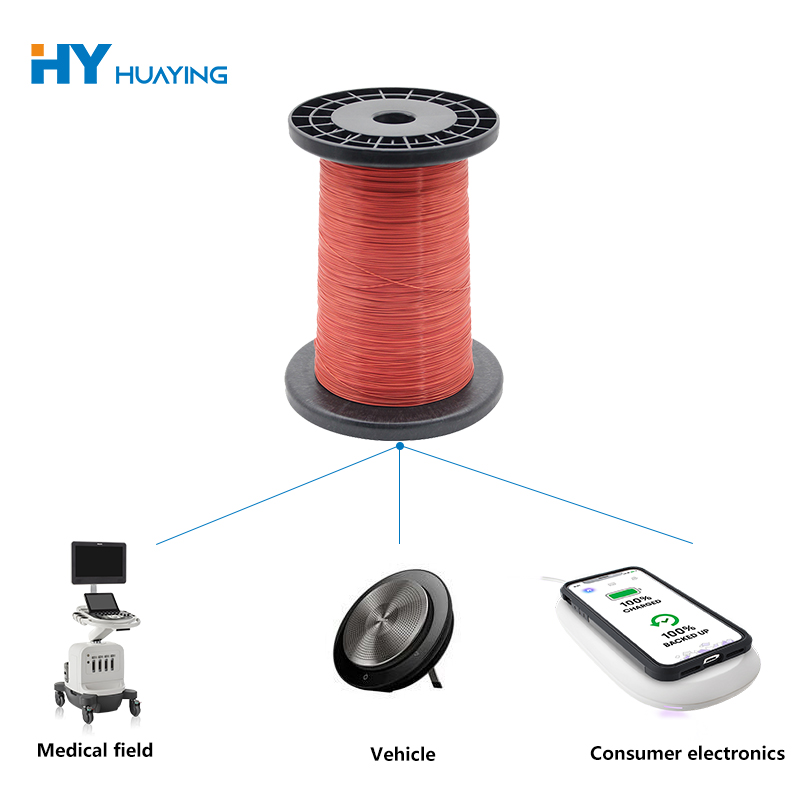
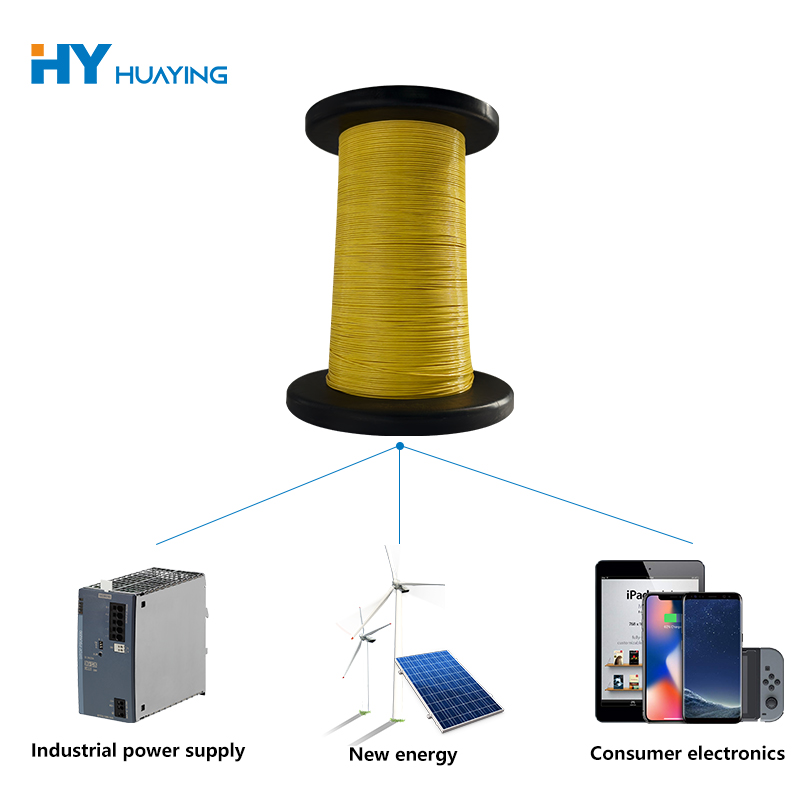
Triple-layer insulated winding wire may be considered for electrical and electronic products in which insulation reliability, compact winding, and consistent conductivity are important. Suitability depends on the wire's actual specifications and the equipment's operating conditions.
- Transformers: Winding conductors must meet the component's voltage, temperature, insulation, and dimensional requirements.
- Inductors and chokes: Appropriate winding wire supports magnetic component designs used in power conversion and filtering circuits.
- Switching power supplies: Insulation and conductor characteristics must be compatible with switching frequency, voltage stress, thermal conditions, and applicable safety requirements.
- Electronic equipment: Compact power modules and other electrical assemblies may benefit from a winding wire selected for limited installation space.
- Industrial electrical systems: Custom winding components require wire specifications matched to their duty cycles and environmental conditions.
Before selecting a wire for any of these applications, engineers should evaluate temperature rise, electrical stress, winding tension, operating frequency, moisture exposure, and relevant certification requirements. A product's suitability for one transformer or power supply does not automatically establish suitability for every design.
6. How Do You Compare Wire Specifications?
Comparing specifications is more reliable than choosing a wire based on its product name alone. The following table summarizes the principal parameters buyers should review.
| Parameter | What It Means | Why It Matters |
|---|---|---|
| Conductor material | Copper or another specified conductive material | Affects conductivity, resistance, and material compatibility. |
| Conductor diameter | Diameter of the conductive core or individual strands | Influences resistance, current capacity, and winding design. |
| Overall wire diameter | Finished diameter including insulation | Determines winding space and compatibility with component dimensions. |
| Insulation construction | Materials and arrangement of the insulation layers | Determines the insulation system's electrical and mechanical characteristics. |
| Conductor resistance | Electrical resistance at a specified reference temperature | Helps estimate voltage drop and resistive losses. |
| Thermal rating | Permitted temperature classification under specified conditions | Supports reliable operation within the design's thermal limits. |
| Dielectric performance | Insulation withstand capability under defined test conditions | Helps verify suitability for the required electrical stress. |
| Mechanical properties | Flexibility, elongation, adhesion, and abrasion resistance | Influences handling, winding performance, and insulation integrity. |
| Compliance requirements | Applicable standards, approvals, and environmental requirements | Helps ensure the wire meets the target market and equipment requirements. |
Huaying publishes example conductor configurations, overall diameter targets, and conductor-resistance values on its product page. Because values are model-specific, buyers should consult the original specification table and request confirmation before using any figure in engineering calculations.
Reference: Triple-Layer Enameled Wire specifications from Huaying.
7. How Should Buyers Select the Right Wire?
Choosing the correct wire starts with the application rather than a general claim about insulation performance. Procurement teams and design engineers can use the following checklist to narrow down suitable options.
- Define the electrical requirements: Specify working voltage, expected current, frequency, dielectric withstand requirements, and acceptable resistance.
- Confirm the thermal conditions: Establish the expected operating temperature, temperature rise, cooling method, and duty cycle.
- Check winding constraints: Determine the available winding window, required finished diameter, bending radius, and production equipment limitations.
- Verify the insulation system: Request details about layer materials, thickness tolerances, adhesion, and relevant electrical test methods.
- Review compliance needs: Identify the standards and approvals required for the finished equipment and destination market.
- Evaluate production consistency: Ask about inspection procedures, batch consistency, packaging, and traceability documentation.
- Request samples when appropriate: Test sample wire using the actual winding process and component design before approving volume production.
A clear technical inquiry should include drawings or dimensional targets, annual or batch demand, operating conditions, required standards, and any special packaging or delivery expectations. This information helps a supplier determine whether an existing model is suitable or whether a customized specification needs evaluation.
8. What Should You Know About Huaying?
Huizhou Huaying Electronic Technology Co., Ltd. supplies insulated wire products and describes its focus on product development, manufacturing quality, and customer support. According to the company's product information, its Triple-Layer Enameled Wire production process includes wire drawing, annealing, insulation application, controlled curing, and dimensional control.
The company also reports having more than 10 patents and an R&D team of over 20 people. These company-reported figures provide background on its stated development capabilities, but buyers should request relevant documentation when patent ownership, technical qualifications, or other evidence is required for supplier approval.
When evaluating Huaying or another wire supplier, purchasing teams should consider more than company credentials. The most important questions concern whether the proposed wire matches the application, whether the required quality records are available, and whether samples and production batches can consistently meet the agreed specification.
For product-specific details, use the official Huaying Triple-Layer Enameled Wire page as the starting point for a technical discussion.
9. Frequently Asked Questions
1. What is the main purpose of Triple-Layer Enameled Wire?
Its primary purpose is to combine a conductive core with multiple insulation layers, helping separate the conductor electrically from adjacent turns and surrounding components. The actual protection level depends on the wire construction, material properties, and verified test results.
2. Is Triple-Layer Enameled Wire the same as triple-insulated wire?
Not necessarily. The terms can describe related products, but the conductor, insulation materials, coating method, and compliance requirements may differ. Always confirm the detailed construction and applicable product standard before treating the two as interchangeable.
3. Which factors determine the electrical performance of the wire?
Important factors include conductor material and dimensions, electrical resistance, insulation thickness, dielectric strength, temperature rating, and manufacturing consistency. Performance must be assessed using the specifications and test conditions relevant to the intended equipment.
4. Can Triple-Layer Enameled Wire be customized?
Customization may be possible depending on the manufacturer's capabilities and production requirements. Buyers should provide the target conductor size, finished diameter, insulation requirements, electrical parameters, and expected order quantity to determine feasibility.
5. How can buyers verify product quality before placing a bulk order?
Request the current technical data sheet, relevant inspection records, and available compliance documentation. Where appropriate, evaluate samples through dimensional checks, winding trials, and electrical tests conducted according to the application's requirements.
6. What information should be included in a quotation request?
Include the required wire model or drawing, conductor dimensions, insulation construction, target electrical performance, applicable standards, order quantity, delivery destination, and any testing or packaging requirements. A complete request makes technical evaluation and quotation more efficient.
10. Conclusion
Triple-Layer Enameled Wire can support electrical designs that require reliable insulation, consistent conductivity, and efficient winding. Selecting the right product requires a careful comparison of conductor dimensions, insulation construction, dielectric performance, thermal limits, and manufacturing quality. By confirming these factors before production, engineers and procurement teams can reduce specification mismatches and make more informed purchasing decisions. If you are sourcing insulated winding wire for transformers, inductors, or other electrical applications, contact Huaying to discuss your technical requirements, request product specifications, and explore a suitable solution for your project.
Related News
- Overcoming Insulation Degradation: Why Multi-Layer Mylar Wire is Replacing Standard Insulated Wire in High-Reliability Electronics
- How Triple-Layer Enameled Wire Optimization Prevents Transformer Insulation Failures?
- How Does Film-Folded Wire Revolutionize Electrical Insulation?
- How Does a Wire Coil Work?
- How Does Teflon Insulated Wire Enhance Performance in Extreme Environments?
- How to Choose Magnet Wire?
Leave me a message